Rabu, 26 Januari 2011

1/2 off popular EA published content.

From now until January 24th, the following content published by EA is on sale for 50% off:

Add-ons

Dragon Age: Origins:

Awakenings Normally: 2400 Sale: 1200 Discount: 50%

Warden’s Keep Normally: 560 Sale: 280 Discount: 50%

Return to Ostagar Normally: 400 Sale: 200 Discount: 50%

The Darkspawn Chronicles Normally: 400 Sale: 200 Discount: 50%

The Golems of Amgarrak Normally: 400 Sale: 200 Discount: 50%

Witch Hunt Normally: 560 Sale: 280 Discount: 50%

Leliana's Song Normally: 560 Sale: 280 Discount: 50%

Medal of Honor Hot Zone Pack Normally: 800 Sale: 400 Discount: 50%

FIFA 11 Live Season All Leagues Normally: 800 Sale: 400 Discount: 50%

Madden 11 Max Pack Normally: 800 Sale: 400 Discount: 50%

Tiger 11 Favorites Course Pack Normally: 1600 Sale: 800 Discount: 50%

NCAA Football 11 Powerpack Normally: 2400 Sale: 1200 Discount: 50%

NHL 11 20th Anniv. Bauer Boost Pack Normally: 560 Sale: 280 Discount: 50%

Fight Night Round 4 Champions Pack II Normally: 800 Sale: 400 Discount: 50%

Games

Madden NFL Arcade Normally: 800 Sale: 400 Discount: 50%

NHL 3 on 3 Arcade Normally: 400 Sale: 200 Discount: 50%

RISK: Factions Normally: 800 Sale: 400 Discount: 50%

MicroBot Normally: 800 Sale: 400 Discount: 50%

Battleship (Hasbro FGN) Price: 800 Sale: 400 Discount: 50%

Scrabble (Hasbro FGN) Normally: 800 Sale: 400 Discount: 50%

Boggle (Hasbro FGN) Normally: 800 Sale: 400 Discount: 50%

DeathSpank Normally: 1200 Sale: 600 Discount: 50%

DeathSpank: Thongs of Virtue Normally: 1200 Sale: 600 Discount: 50%

Battlefield 1943 Normally: 1200 Sale: 600 Discount: 50%

Selasa, 25 Januari 2011

Further "This week in Debian" interviews

Further "This week in Debian" interviews: "Since the last issue of the Debian Project News, five new issues of the
'This week in
Debian' podcast
have been published: with
Asheesh
Laroia
, member of the Debian Mentor Community; with
Dave
Yates
, host of the Lotta
Linux Links Podcast
; with
George
Castro
, discussing Ubuntu as a Debian derivative; with
Jonathan
Nadeau
, about the latest Debian news, and the upcoming release of 'Squeeze'; and with
Rhonda,
member of Debian's Webmaster Team, discussing the updated
Debian Website, due for the release of 'Squeeze'."

BizTalk Server 2010 Adapters

If you wonder where all adapters for BizTalk are or which ones are available when you have install DVD in virtually in your hand. There are two directories on DVD (after you mount it with something like ISO mount). One called BizTalk accelerators and one named BizTalk Server. Both folders contain a setup and when you run it a splash screen will appear.

BizTalk 2010 Install

In accelerators splash screen you find links to install:

  • Accelerators for HL7
  • Accelerators for RosettaNet
  • Accelerators for SWIFT
  • FileAct and Interact Adapters for SWIFT

Other splash screen that appears after running setup in BizTalk folder you will find links for:

  • Installing BizTalk Server
  • Installation UDDI
  • Installation RFID
  • Installation RFID Mobile
  • BizTalk Adapters (LOB Adapters)
  • AppFabric Connect

It can be annoying that you will have to find out what to install when looking for particular adapter. When installing BizTalk Server you will get the out-of-box adapters (HTTP, WCF-Adapters, SQL, FILE, FTP, ect), Adapter Pack contain ERP adapters (SAP, Siebel, Oracle, Oracle EBS), and other adapters like for instance MLLP (HL7) are found in appropriate accelerator. When installing Adapter Pack the necessary prerequisites are handed to you during installation (see my post Installing BizTalk Adapter Pack 2010 on x64). Still there are adapters that you have to download separately like one for Microsoft Dynamics CRM 4.0.

Documentation however is a different story. By clicking installation guide html page in accelerator folder you get access to installation guides by links.

Install guides

Other documentation if found at Microsoft:

Finally for BizTalk Server itself there is documentation available for installation (divers Operating Systems), and the product.

Technorati:

Brewers Association redefines “small”

Brewers Association redefines “small” originally appeared on Hop Talk.


A press release came out from the Brewers Association today. They’ve changed the definition of what is a “small” brewer.


Here’s a blurb:


In the BA’s craft brewer definition, the term “small” now refers to any independent brewery that produces up to 6 million barrels of traditional beer. The previous definition capped production at 2 million barrels. The changed definition is currently in effect and can be reviewed on the BA website, BrewersAssociation.org. The change to the bylaws went into effect December 20, 2010.


I get what they’re doing. But doesn’t it seem like they’re working really hard to keep Anheuser-Busch InBev, MillerCoors, and their ilk out of “the club”? I mean, there’s a big difference between 2 million barrels and 300 million barrels, but still. What happens when the big little guys get bigger?


Of course, to me, the big difference between the members of the Craft Brewer Club and the…other guys, is marketing. Millions upon millions of dollars to convince us that industrial-brewed light lager is what beer really is and it’s what we want to drink.


Maybe that’s what the Brewers Association should use as their definition: Marketing dollars.


2011 Chevrolet Camaro Convertible to Pace 100th Anniversary of the Indianapolis 500; Chevy Offering 50 Replicas for Sale


Last year, the reborn 2010 Chevy Camaro coupe serve as the pace car for the Indy 500, and Chevy built 200 replicas wearing Inferno Orange paint with White Pearl stripes that it sold to the public. The car was a throwback to the first Indy Camaro pace car, which lead the field in 1969, except that it had a fixed roof and a reversed color scheme. Now, with the introduction of the 2011 Camaro convertible, Chevrolet was able to create a much more accurate reproduction of the original, which will steady the racers at this year’s 100th-anniversary running of the Indy 500.


Essentially done in the same fashion as the 2010 coupe, the so-called 2011 Indianapolis 500 Festival Committee cars start life with the 2SS equipment package—the 400-hp V-8 hooked to a six-speed automatic transmission, the Brembo brake package, 20-inch wheels, and the center-console auxiliary gauge package—as well as the RS package, which fits HID headlights and unique taillights. Unique features of the special-edition cars include the Summit White paint with orange stripes, “Pace Car” graphics on the doors, Indy 500–embroidered headrests for the orange leather seats, and a different grille treatment. Additionally, the interior trim is done in white and features a cool touch with the exterior orange stripes extending onto the dash.


Just 50 examples of the Festival Committee cars will be offered for sale at a price yet to be announced, with the first example of the production run hitting the Barrett-Jackson auction block on Saturday, January 22. The winner of the car will also be granted the opportunity to drive the car during a parade lap just before the start of the race. Proceeds from the sale will benefit the David Foster Foundation, a charity formed to support children in need of life-saving organ transplants.


Related posts:

  1. Chevrolet to Offer 2010 Camaro Indy 500 Pace Car Replicas
  2. 2011 Chevrolet Camaro Convertible – Feature
  3. 2011 Chevrolet Camaro Convertible – Auto Shows

China’s massive Time’s Square video ad

This ad, coinciding with Hu’s trip to the US, runs on six colossal video billboards over Time’s Square. According to the FT it was created by the global ad agency Lintas, but I’m willing to place bets it was conceived and produced in China, and it wasn’t run by any US focus groups.

The golden rule for this kind of messaging is to speak in the voice of your audience. I don’t think this ad does that. It calls out for localization, and I’m afraid it’s going to backfire, if it hasn’t already, raising cries about “Red China” and its creepy propaganda.


Reading between the lines of WSJ reporter Loretta Chao’s post about the ad, I get the sense that she thinks it’s a mistake, and that she won’t be alone in this belief.


[E]ach group of people in the ad is pictured with a banner — some more literal than others. A photo of Yao Ming and other athletes standing in front of the Birds Nest national stadium in Beijing is titled “Thrilling Chinese Athletics.” An image of Mr. Li standing alongside two other technology entrepreneurs, Netease founder Ding Lei and Alibaba Group founder Jack Ma, carries a banner that reads “Chinese Wealth” — a label probably more immediately meaningful (and more appealing) to Chinese viewers than the hundreds of thousands of daily passersby in Times Square.


The appearance of the Internet executives fades into a solo shot of Wang Jianzhou, chairman of China’s biggest state-owned telecom giant China Mobile, also under the “Chinese Wealth” banner. That image, while almost certainly obscure for New York pedestrians, could probably be interpreted by imaginative Chinese viewers as either ominous or depressing in the light of the company’s government-backed ubiquity.


I understand China’s thirst for soft power and image enhancement outside of China. I question, however, why they never seem able to get good marketing advice about how to present themselves. Chinese Wealth and Thrilling Chinese Athletics banners simply won’t resonate (I believe) with Time’s Square pedestrians. It will be seen as cheesy propaganda, the likes of which most Americans thought went out of style with the collapse of the Soviet Union.


I suggest that next time they find a Donald Draper-type on Madison Avenue who understands the need to focus on the viewer first. They (China) need to put away all their beliefs about what works in China. It’s irrelevant when you’re putting up gargantuan ads in New York City. Americans aren’t interested in Wang Jianzhou.


Update: Interesting comments here, some of them quite stupid.


Update 2: China Geeks has a superb post on the ad, much better than my own.


Update 3: And another great analysis of the ad can be found here.

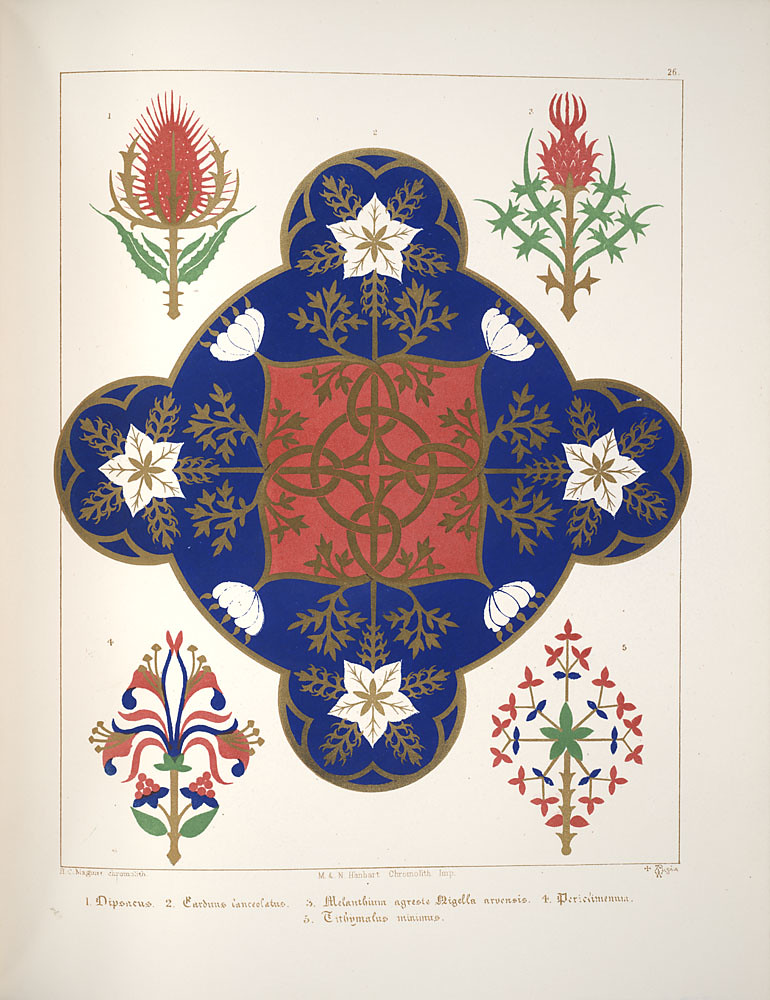
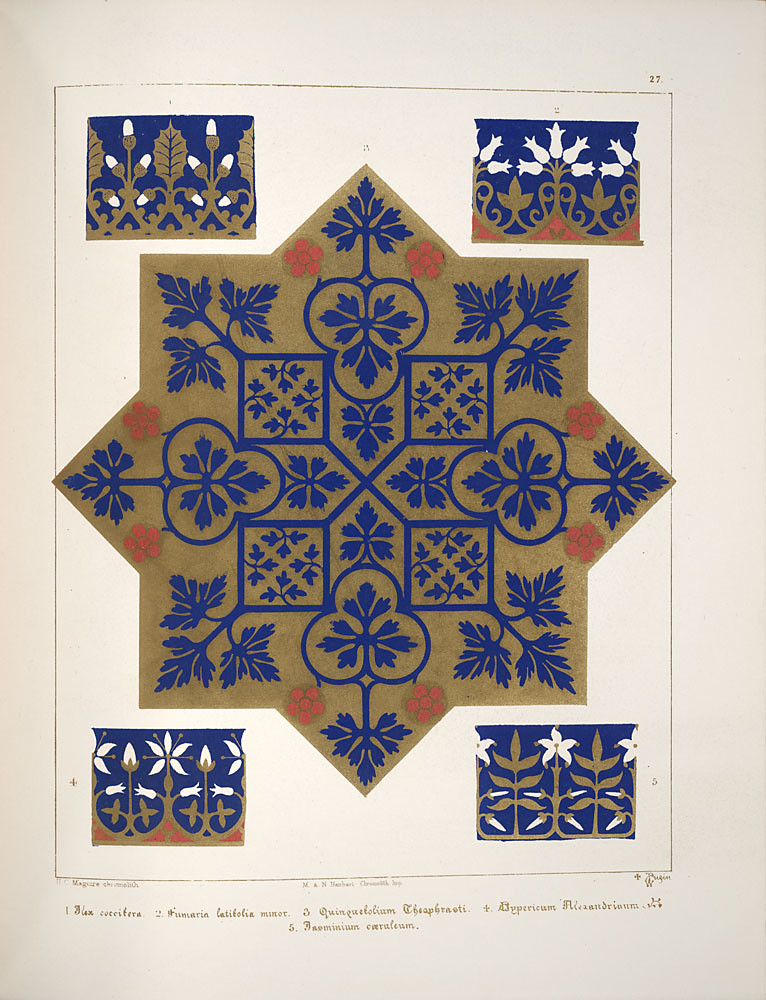
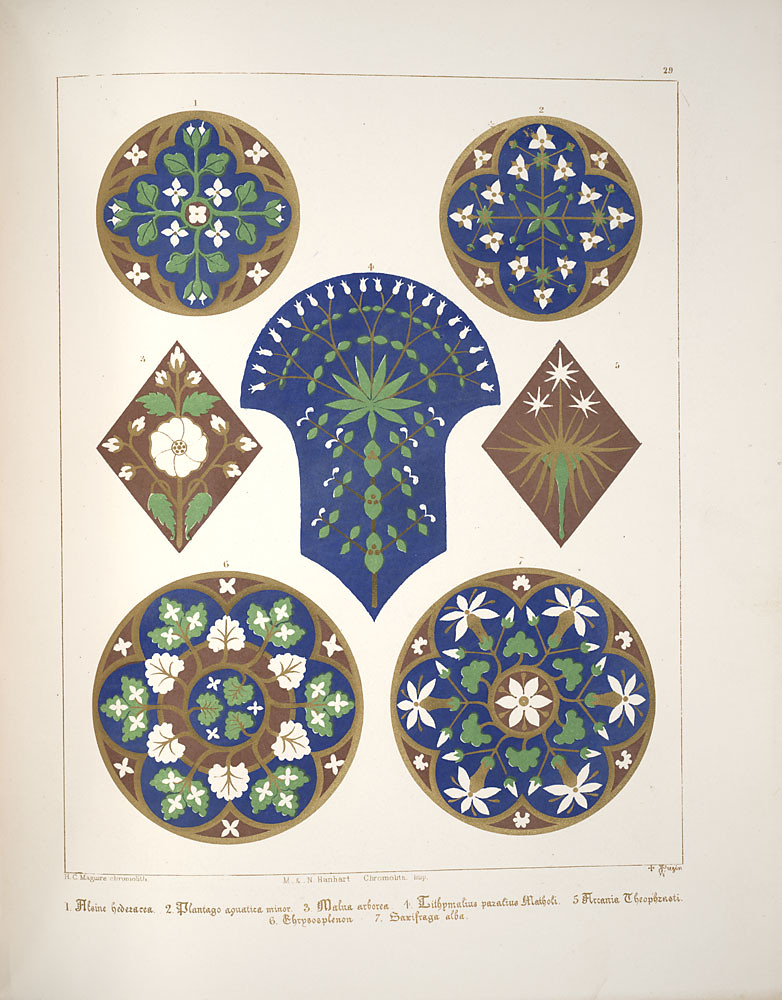
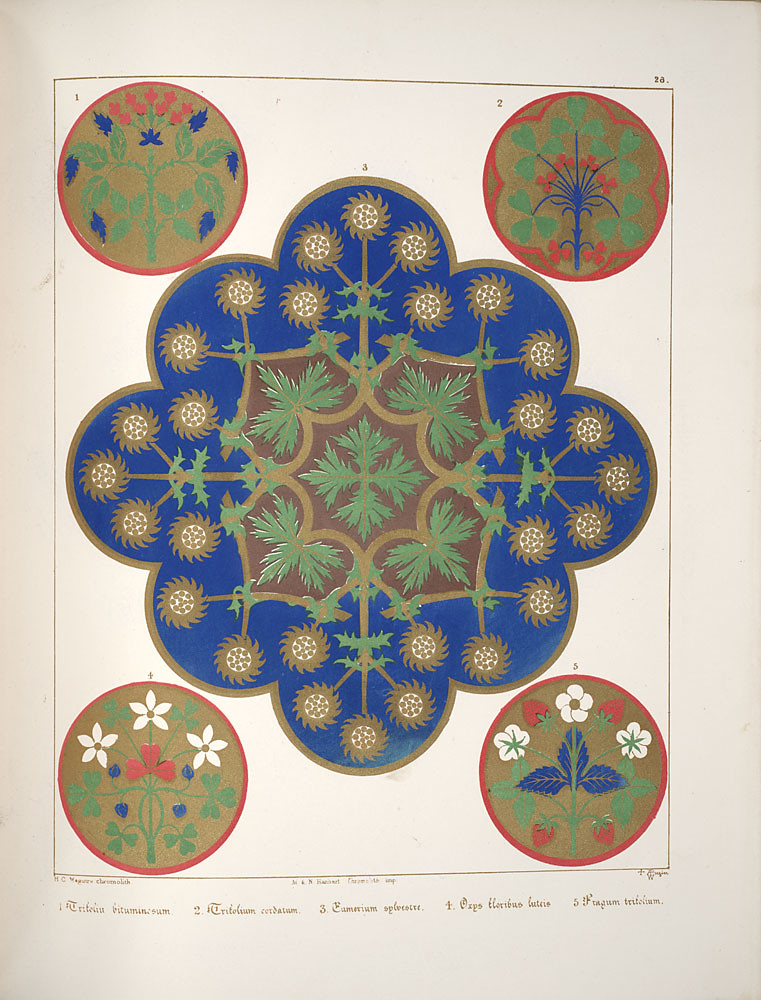
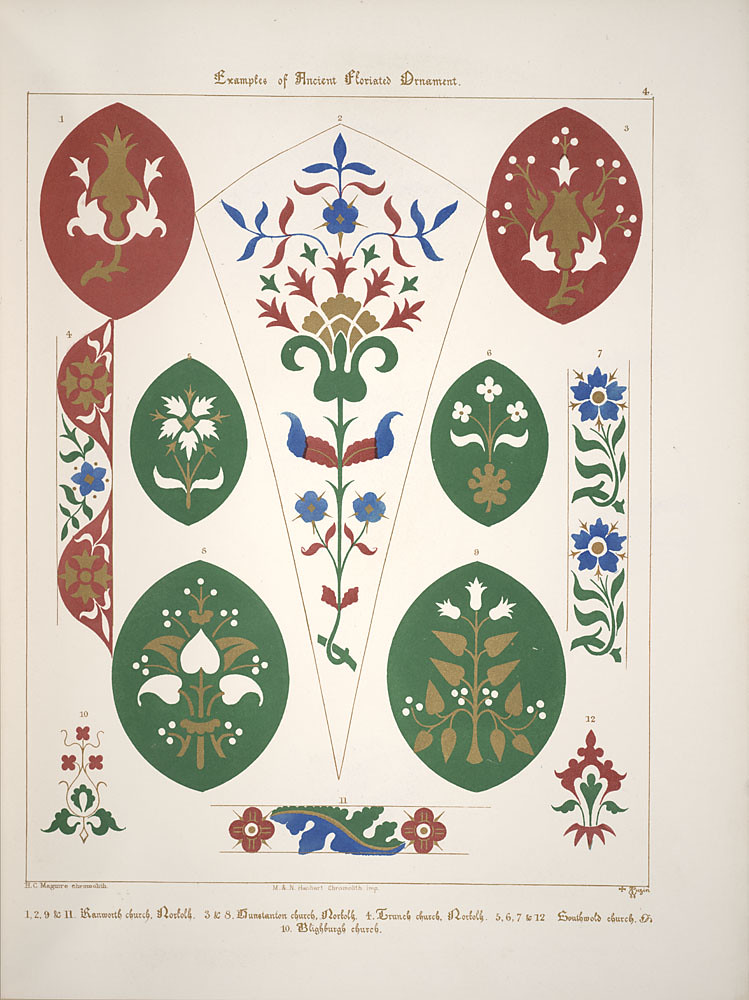
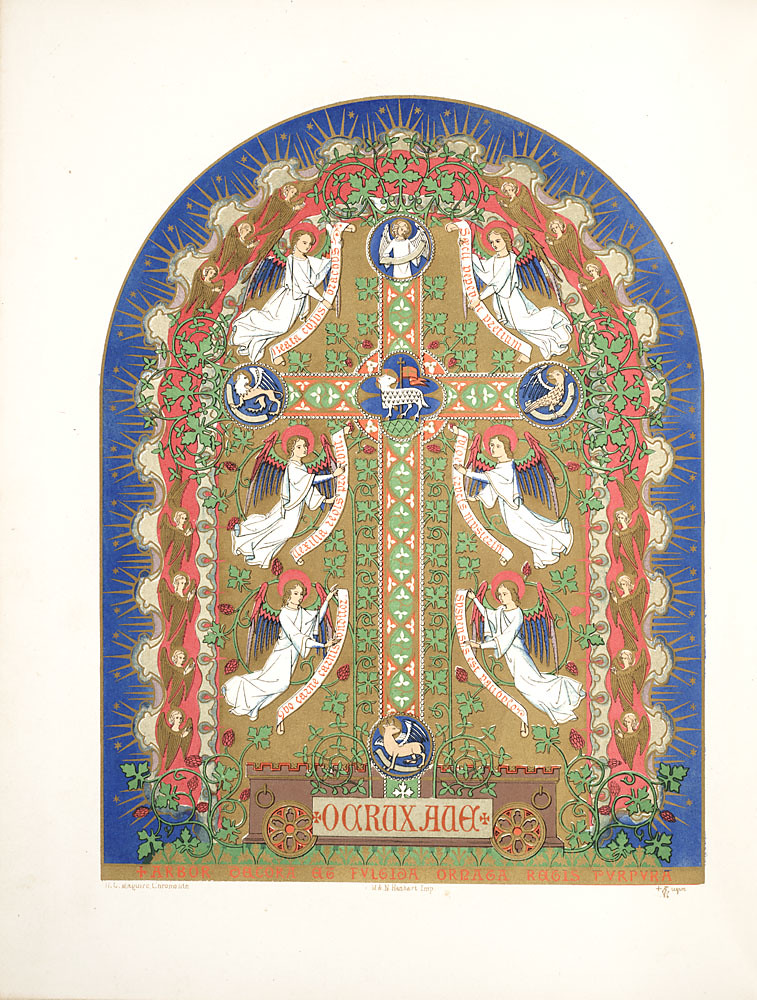
Floriated Ornament

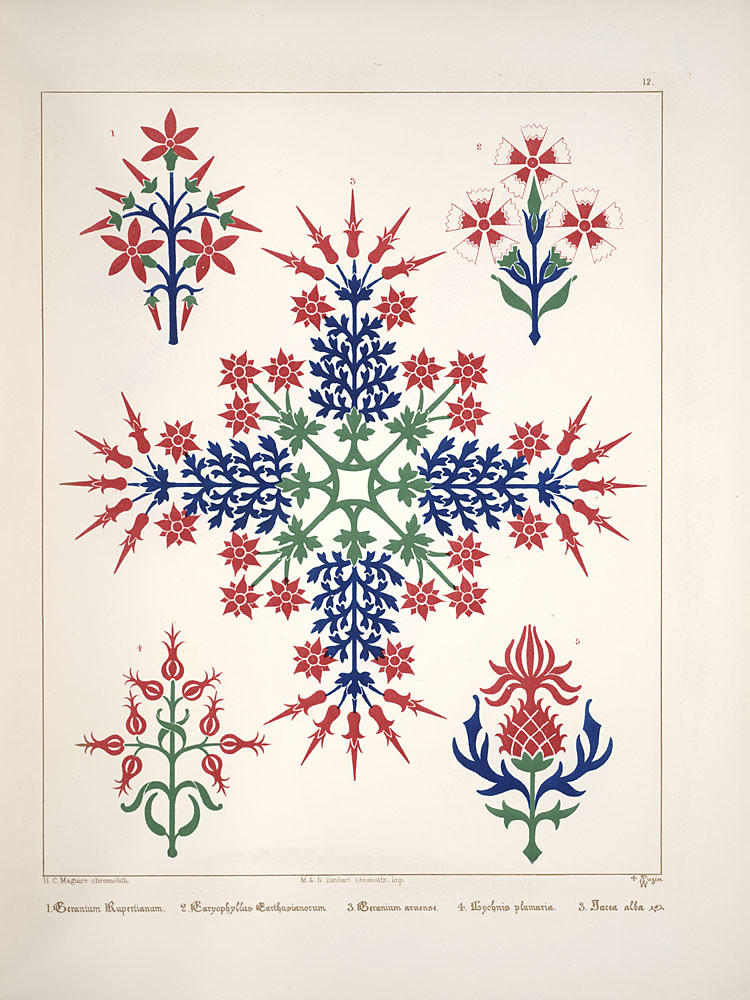
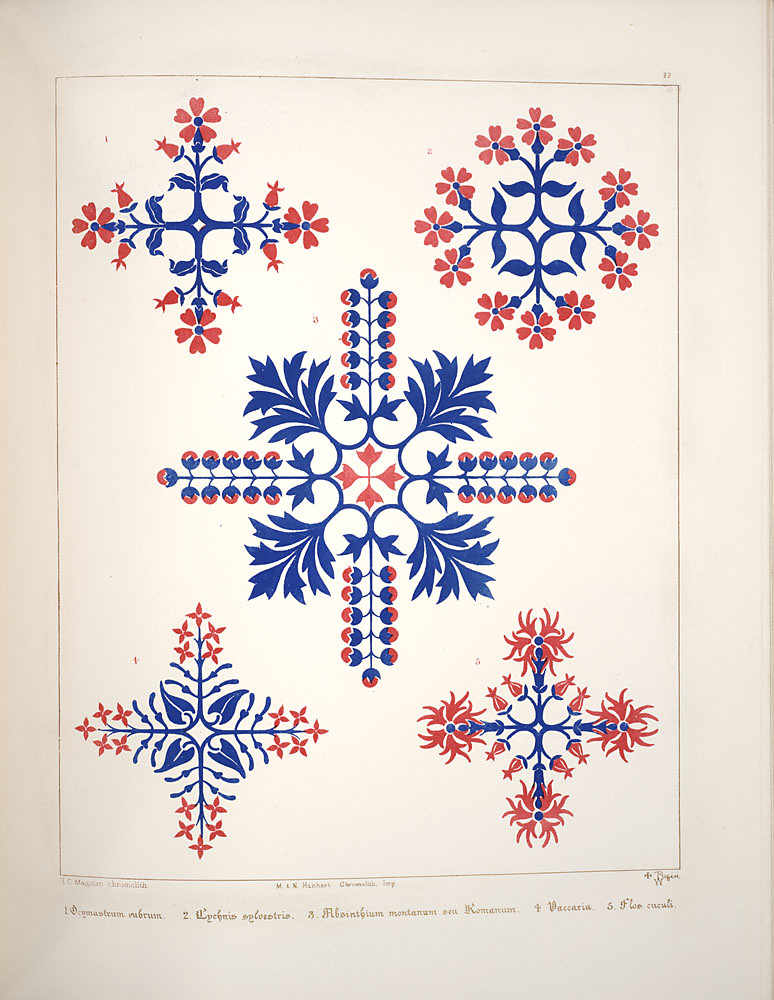
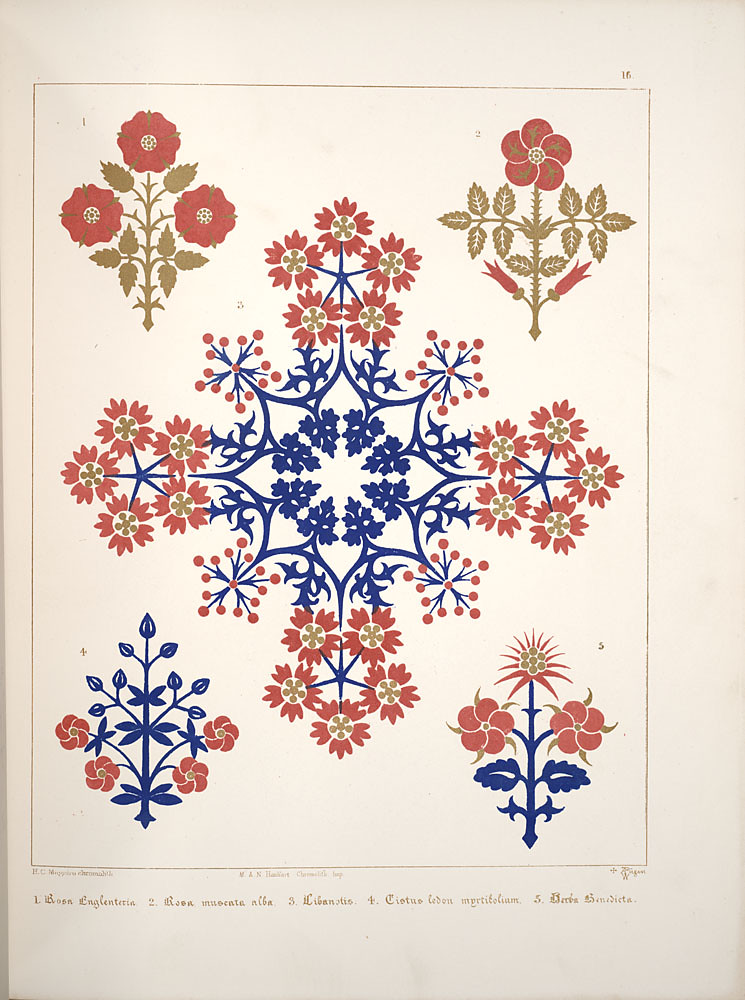
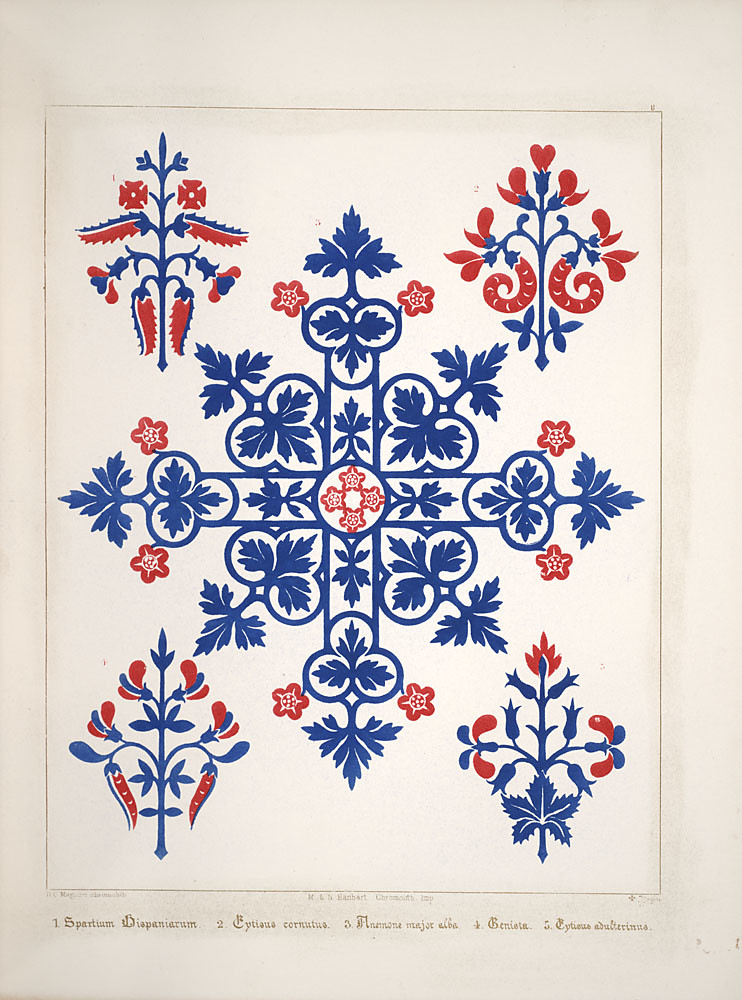
'Reacting to the tradition of neo-classicism as early as the 1830's, English architects and decorators took a renewed interest in the art of Gothic cathedrals. This movement, called Gothic Revival, shaped the whole Victorian era and was on a scale that had no equivalent in other European countries. In the midst of the industrial boom, the enthusiasm for the Gothic period, seen as an exemplary society in which the arts blossomed in a mystical and fraternal spirit, was set against the effects, considered degrading, of mechanisation.

Augustus Pugin (1812-1852) was the first to rediscover in Gothic art the principle of a close union between art, craftsmanship and technique. His main treatises of architecture and decoration, such as 'Floriated Ornament' (1849), were to influence for a long time the artists of the Arts and Crafts movement. Today, the magnificent decoration of the London Houses of Parliament still testifies to his virtuosity as a decorator and a colourist.' [source]


decorative motifs of snow crystals


Floriated ornament - 19th cent. decorative designs


Pugin's gothic revival designs


decoration drawings by Pugin 1850


Pugin gothic revival illustrations


Floriated ornament, a series of thirty-one designs, 1849 - Augustus Welby Northmore Pugin a


Floriated ornament, a series of thirty-one designs, 1849 - Augustus Welby Northmore Pugin j


Floriated ornament, a series of thirty-one designs, 1849 - Augustus Welby Northmore Pugin k


Floriated ornament, a series of thirty-one designs, 1849 - Augustus Welby Northmore Pugin


Floriated ornament, a series of thirty-one designs, 1849 - Augustus Welby Northmore Pugin e


Floriated ornament, a series of thirty-one designs, 1849 - Augustus Welby Northmore Pugin d


'Floriated Ornament: a series of thirty-one designs' (1849) by Augustus WN Pugin was recently digitised by The Smithsonian Institution. It is hosted within their fabulous Galaxy Image Database [previoiusly] and was discovered via The Smithsonian Libraries blog.
'Pugin's plea in this book was for designers to go directly to nature itself, as medieval designers had done, instead of making use of already conventionalised classical or antique ornament, which architects and designers had used since the period of the Italian Renaissance. He also felt that, to derive the greatest decorative value from natural forms, the structure of plants should be studied and exploited (as he maintained the medieval artists had done), instead of (as contemporary decorative artists were wont to do) painting realistic bunches of fiowers, etc., imitating a three dimensional effect in their decorations of flat objects. On this point, Pugin was in advance of the decorative theories of Owen Jones, Christopher Dresser, and William Morris.'
----Elzea et al: 'The Pre-Raphaelite Era, 1848-1914', 1976 [source]